Bottom line
- IPVanish puts no cap on connected devices, and in published tests download speed fell only 6.38%, so I would look at it for a busy household that wants speed.
- The 2-year Essential plan is $2.39 a month, but month to month it is $12.99 and the reviews report a renewal of $89.99 a year, so plan the exit before the first term ends.
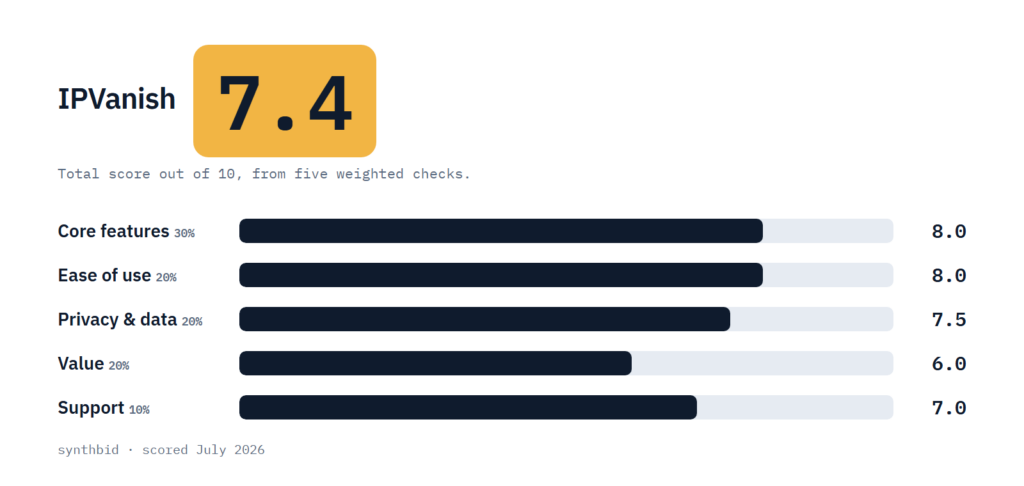
- I give it 7.4 out of 10: strong on devices and speed, held back by the price pattern, a US owner that also owns one of the main review sites, and patchy Netflix access.
IPVanish is a US VPN that sells on two things: no limit on how many devices you connect, and speed that holds up in published tests. The trade-off is price. The monthly rate is high, the headline long-term rate is low, and the gap between the two is where most buyers get caught.
What works
- No cap on simultaneous connections, on any plan
- Download speed fell only 6.38% in one set of published tests
- Double hop lets you pick both the entry and the exit server
- A no-logs policy checked by an independent audit
What doesn’t
- Month to month costs $12.99, and the reviews report a renewal of $89.99 a year
- Latency rose 103.86% in the same published tests
- Netflix was blocked in the US and Canada in one review
- The free trial is mobile only, and the 30-day refund covers only yearly and 2-year plans
What you are buying
IPVanish sells three tiers on its pricing page, and all of them include the VPN with unlimited devices and a no-logs policy. Essential adds threat protection, 24/7 live chat and a 3GB eSIM data allowance. Complete adds a next-generation antivirus and phone support. Advanced adds 1TB of cloud storage, a Secure Browser and a bonus 2GB of eSIM data, which makes 5GB in total.
The two main reviews describe only Essential and Advanced, and they list them at $12.99 and $14.99 a month on monthly billing. Complete shows up only on the current pricing page, so the feature lists in those reviews may be a step behind.
For most readers I would look at Essential and stop there. A bundled antivirus is the kind of extra I would not pay for on its own, and PCWorld makes the same point, recommending standalone antivirus over the VIPRE software that comes with IPVanish. Advanced is the tier to consider only if you want cloud storage and a browser sandbox on the same bill.
Devices, apps and features
The headline feature is the missing device cap. PCMag points out that limits of five, six or seven simultaneous connections are still common, and that an unlimited allowance saves you from disconnecting one phone or TV to connect another. Surfshark and TunnelBear have also dropped their caps, so IPVanish is not unique, but it is still the exception.
Native apps cover Windows, macOS, Linux, Android including Android TV, iOS, Apple TV, Amazon Fire TV and ChromeOS. Browser extensions exist for Chrome, Edge, Firefox, Opera, Brave and Vivaldi, and you can set the VPN up on a router so that every device behind it is covered.
The settings cover what I would expect from a paid VPN: a kill switch, DNS leak protection, split tunneling and automatic connection at start-up. Split tunneling by app works on Windows and Android, and by domain on Windows, Android, iOS and macOS. Two published checks found no leaks while connected.
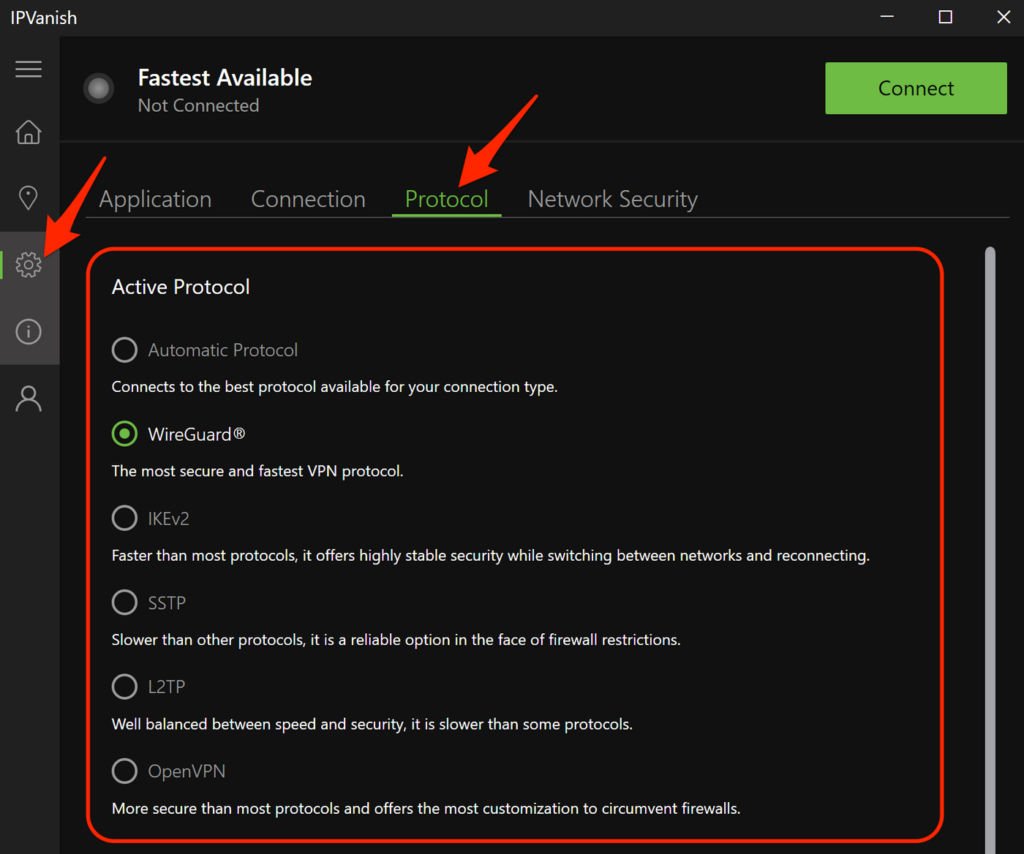
OpenVPN, WireGuard and IKEv2 are available on all major operating systems, with IPSec added on macOS, iOS and Linux. Neither main review found post-quantum encryption. One review names ExpressVPN as ahead on that, and I cover that provider in my ExpressVPN review.
Double hop lets you choose both the entry and the exit server, which not every provider allows. It costs speed, so I would switch it on for a specific job. The server list is where the two reviews disagree: the Windows list was searchable by name only in one review, while the other describes a filter that finds the servers with the lowest ping or load. I would expect the app to have changed between the two reviews, but the sources do not say which description is current.
The network is about 3,400 servers across 150 locations, including Africa and South America, which many providers skip. There are none in China or Russia. Roughly one third of the servers had moved to RAM-only hardware at the time of the PCWorld review, and the server page marks which ones are RAM-only.
Security extras
The extras are where IPVanish differs most from a plain VPN. The pricing page lists a URL and link checker, a QR code scanner, a data breach checker, a password generator and a SOCKS5 proxy. Threat protection uses Vipre technology to block ads, trackers and malicious sites, and it only works while the VPN is connected.
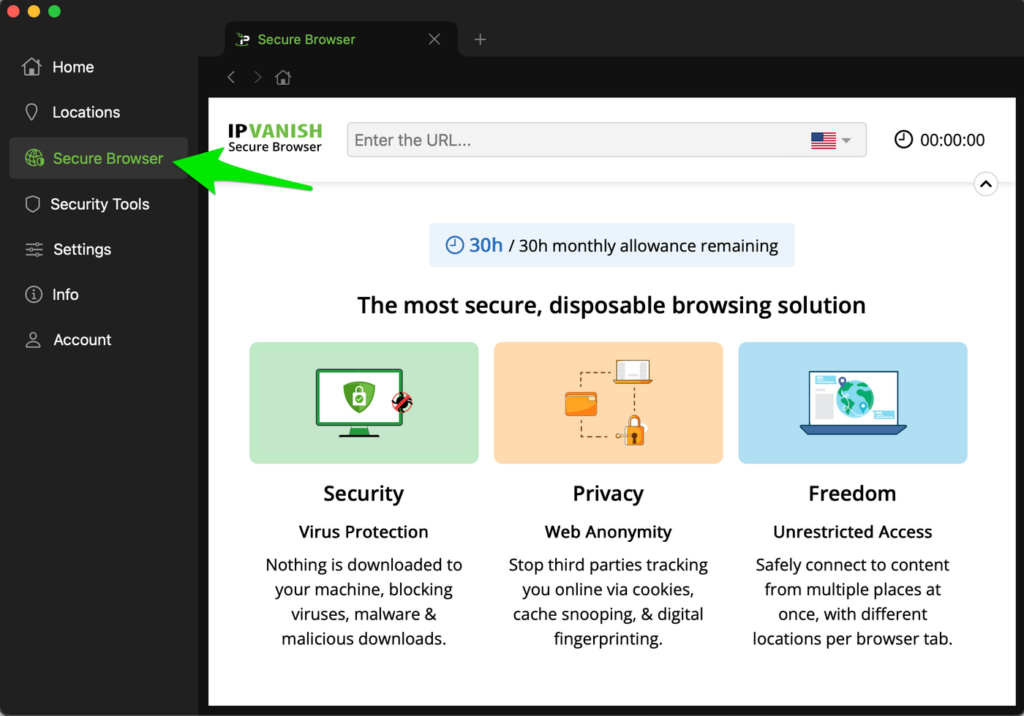
Secure Browser is the unusual one. It runs the page on IPVanish’s servers and sends you a video feed, so malware on a risky site never reaches your device. The catch is that the app does not walk you through claiming most extras, and a reviewer notes that you may have to visit the site and its help center to find how to set up the eSIM or cloud storage.
Speed and streaming
In the most recent published speed tests, download speed fell 6.38% and upload speed fell 9.29% with IPVanish connected, against average falls of 27.81% and 41.1% for the VPNs in the same set. Latency is the weak spot: it rose 103.86%, well above the 41.9% average. Separate tests of VPN servers in different countries put IPVanish at 60% of base download speed and 58% of base upload speed, in the top 10 fastest services that reviewer has tried.
Both reviews say your own results will depend on where and how you connect, so treat the figures as a ranking and not a promise. A latency rise of that size will not matter for downloads or video, but I would watch for it in calls and games. My guide on whether a VPN slows down your internet explains why latency and speed move separately.
Streaming is where the sources part ways. In the earlier review, IPVanish unblocked Netflix, Disney+, HBO Max and Amazon Prime. In the later one, Netflix detected and blocked it in the US and Canada across several servers, while Australia, Japan and the UK opened without limits. IPVanish disputes this and says Netflix works across the major regions on supported devices.
Netflix blocking changes from week to week, so I would read the later result as a warning and not a verdict. If one service is the reason you are buying, use the refund window to check it before you commit.
Privacy and ownership
IPVanish is based in the United States, which some privacy-minded buyers weigh against it. Its answer is a no-logs policy, and a company representative told one reviewer that it responds to valid law enforcement requests but has no user data to provide. The audit has limits: the latest no-logs audit was done by Schellman in February 2025, and one review notes that the third-party audit covered only the no-logs claims. IPVanish has also begun publishing quarterly transparency reports.
The privacy policy says IPVanish does not sell or rent data to third parties and does not collect or monitor your browsing activity. The reviewer who read it found the amount and duration of the data it does keep, mostly aggregate analytics information, to be on the higher end, and noted that the website uses third-party cookies and trackers. That is not a no-logs failure, but it is the kind of detail that keeps my privacy score below the top.
IPVanish is a Ziff Davis company, part of the Vipre Security Group. Ziff Davis also publishes PCMag, and the review there says so openly, so I read its score with that in mind. The ownership also explains the bundle on the pricing page, since Vipre antivirus, Livedrive storage and SugarSync all sit inside the same group.
Payment is by card, Amazon Pay, Apple Pay, Google Pay or PayPal, with no bitcoin or gift card option. If anonymous payment matters, one review notes that Mullvad accepts cash by post, and my Mullvad review has more on it.
Support
IPVanish lists 24/7 live chat on every tier and phone support from the Complete tier up. The help center has written guides with images and videos for each supported platform, and one reviewer found them clear for both beginners and advanced users.
Reaching a person is the awkward part. One reviewer could not find an obvious route to an agent, ended up with an AI chat trained on the help center that often took over a minute to answer simple questions, and found the real contact options inside a blog post behind the About page. After that, live chat answered within a couple of minutes, email took just under 24 hours and a phone call was answered after about five minutes by a patient agent.
Pricing
| Plan | Price | Billed | What it adds |
|---|---|---|---|
| Essential | $2.39/mo | $57.36 for the first 2 years | The VPN, threat protection, live chat and 3GB of eSIM data |
| Complete | $3.09/mo | $74.16 for the first 2 years | Essential plus a next-generation antivirus and phone support |
| Advanced | $3.59/mo | $86.16 for the first 2 years | Complete plus 1TB of cloud storage, Secure Browser and 5GB of eSIM data in total |
Prices from IPVanish’s pricing page, checked July 2026.
Two years is 24 months, so the arithmetic holds: $2.39 × 24 = $57.36. Month to month, the reviews list Essential at $12.99 and Advanced at $14.99. They also quote the 2-year Essential plan at $52.56 and Advanced at $78.96, while the current page shows $57.36 and $86.16, so prices have moved since they were written.
The renewal is the number to find before you pay. Both reviews report that Essential renews at $89.99 a year and Advanced at $109.99 a year after the first term, on the yearly and 2-year plans alike. The first two years of Essential average $28.68 a year, so the renewal is about three times the early price. The plan cards on the page I saved do not state a renewal rate, and one review lists confusing renewal rates among its cons. Read the renewal terms before you pay, put the renewal date in your calendar and decide then whether to stay, switch to another offer or cancel.
There is no free version. A 7-day trial exists only by signing up for a 2-year plan on Android or iOS, and it needs a payment method. The 30-day money-back guarantee is the better safety net, but both reviews say it covers only the yearly and 2-year plans, although one of them elsewhere says all plans are covered. Check the monthly plan’s terms at checkout.
How it scored
Core features, 8.0. Unlimited devices, double hop with a choice of entry and exit servers, split tunneling, a kill switch, a large network and a long list of extras on the higher tiers. I held it at 8.0 because Netflix access slipped in the latest published check, the server list has been described as hard to filter and there is no post-quantum encryption.
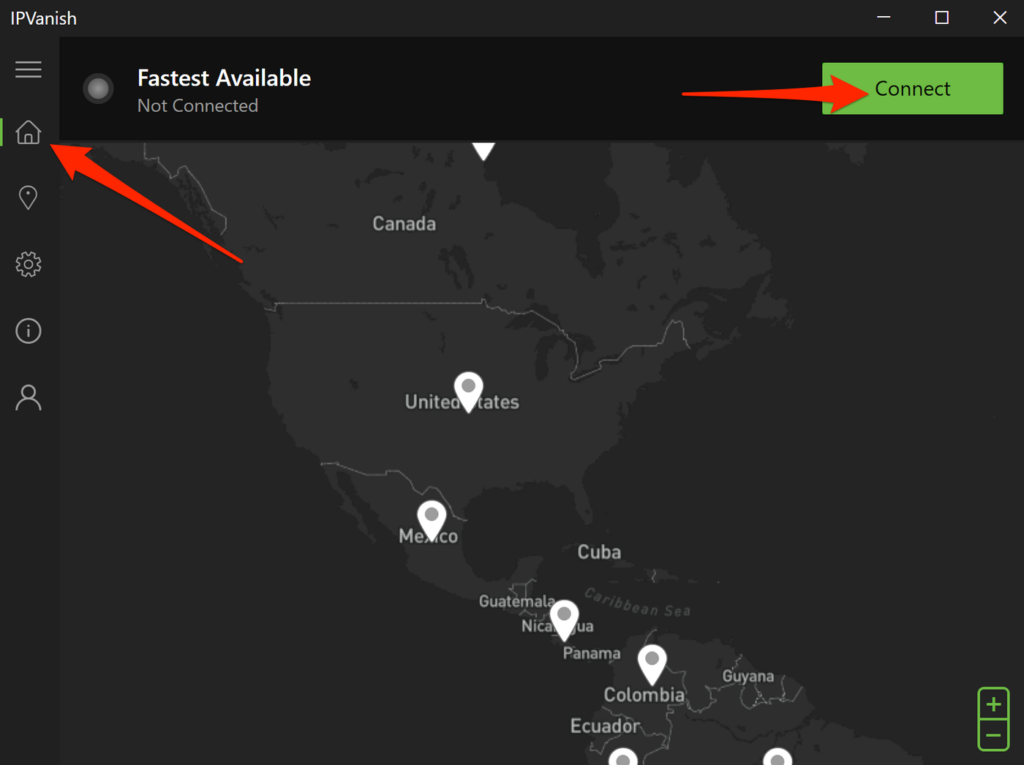
Ease of use, 8.0. The apps look and behave the same across platforms, a quick connect button sits on the map and there is a built-in tutorial. The extras are the weak spot, because the app does not explain how to claim most of them, and the trial exists only on mobile.
Privacy and data, 7.5. A no-logs policy checked by an independent audit, RAM-only servers on part of the network and quarterly transparency reports are real points in its favor. I took points off because the company is US-based, the audit covered only the no-logs claims, one review found the retained analytics data on the high side and the website uses third-party trackers.
Value, 6.0. The 2-year Essential price is low, but month to month costs $12.99, the renewal is reported at $89.99 a year, the plan cards do not show it and the refund covers fewer plans. One review says NordVPN and Proton VPN offer more for the money, and my scores agree: this sits below Proton VPN’s 8.5 and NordVPN’s 6.5 in my reviews.
Support, 7.0. Chat is listed around the clock, phone support is on the Complete tier and agents were helpful. I took points off because the route to a human is hard to find, the AI chat was slow and email took close to a day.
The five scores, weighted as the How I test page describes, come to a total of 7.4.
Alternatives worth a look
Proton VPN
Consider it if a privacy track record matters more to you than device count and you want a free plan before paying. One review of IPVanish says Proton gives more for the money. The detail is in my Proton VPN review.
NordVPN
Choose it if you want a longer list of extras at the same $12.99 monthly price, with a 30-day guarantee that covers every plan. Read my NordVPN review first, because the renewal price is the thing to check.
Mullvad
Choose it if you care most about how little account data you hand over and want one simple price. It has fewer extras than IPVanish. See my Mullvad review for the trade-offs.
FAQ
Is there a device limit on IPVanish?
No. The pricing page lists unlimited devices on every tier, and both main reviews confirm it.
Does IPVanish keep logs?
It says it does not. The latest independent audit of its no-logs policy was in February 2025, according to one review, and a company representative told another reviewer that it has no user data to hand over. The website uses third-party cookies and trackers, which is separate from the VPN itself.
Does IPVanish have a free trial?
Not on desktop. A 7-day trial is available only on Android and iOS with a 2-year plan, and it needs a payment method. A 30-day money-back guarantee applies to the yearly and 2-year plans.
Who owns IPVanish?
Ziff Davis owns IPVanish, through the Vipre Security Group. The same company publishes one of the two main reviews behind this page.