Bottom line
- DeleteMe pairs automated opt-outs with human privacy specialists, and one published review puts its coverage at more than 750 data brokers.
- First results vary by reviewer: one review expects an average of 57 site removals in the first round, while another reviewer saw 44 of 371 listings taken down in the first report.
- There is no monthly billing. One person pays $129 for a year, so I would read the renewal terms before committing to anything longer.
DeleteMe is a data removal service from Abine, a privacy company. It suits people in the United States who would rather pay specialists to chase data brokers than fill in opt-out forms by hand. The trade-off is that it costs more than the fully automated services and has no monthly plan.
What works
- Automated removals on the most active brokers, with specialists handling the rest by hand
- Up to 40 custom removal requests a year
- Quarterly reports with screenshots and verification timestamps
- Email, chat and phone support, plus a dedicated privacy advisor
What doesn’t
- No monthly billing: you prepay for a year or two
- US residents only
- It cannot remove court records or government filings, or delete your social media profiles
- It costs more than basic automated options
What you get
DeleteMe finds your listings on data broker and people-search sites and asks each one to take them down. According to TechRadar, the service was founded in 2011 and goes after names, birthdates, phone numbers, email addresses, past and current addresses, relatives’ names, property records and photos. The company describes a cycle of searching, submitting requests and scanning again through the year, so this works as a subscription and not as a one-time cleanup.
Two reviews agree that every plan carries the same feature set: unlimited removals for names, aliases and email addresses, email masking, custom removal requests, quarterly reports and a dedicated privacy advisor. Phone masking is an add-on at $7 per number. I like that the list is the same for everyone, because it removes the guesswork of picking a tier. The pricing page still links to a premium plan, which I come back to in the pricing section.
How the removal works
The model is a hybrid. The same review reports that automation handles the 100 to 125 most active brokers, including Whitepages, Spokeo and MyLife, and that privacy specialists work through the rest by hand across a list of more than 750 brokers. Its argument is that a human step avoids bots that confirm a record is accurate while trying to delete it. I find that plausible for the long tail of small sites, where each form asks for something slightly different.
After sign-up you fill in a data sheet with your full name, phone numbers, current address and past addresses. You can also upload a photo of a government ID. It is optional, but some brokers ask for proof of identity before they remove a record. Brokers may also email you, and when they do you have to confirm the removal request yourself.
Custom requests are the feature I would reach for first. If you find yourself on a site that is not on the list, you send it through the portal, and one review says each plan allows up to 40 custom removals a year with a typical reply within 48 hours. DeleteMe also says new opt-outs are added through the year at no extra cost, so the list can grow without a price change.
What the first reports looked like
Timing comes first. The first report arrives about a week after you submit your details and later reports follow about every three months, according to ZDNET. Its reviewer received the first report five days after submitting.
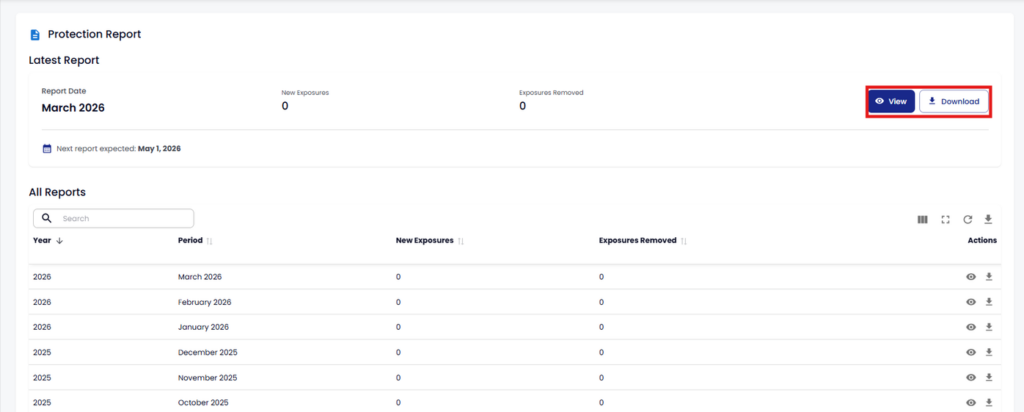
That report covered 371 listings, of which 44 had been taken down, with many others still in process. Removal timelines varied from two days to two weeks, and the report named PeopleFinders as the broker holding the most information on that reviewer.
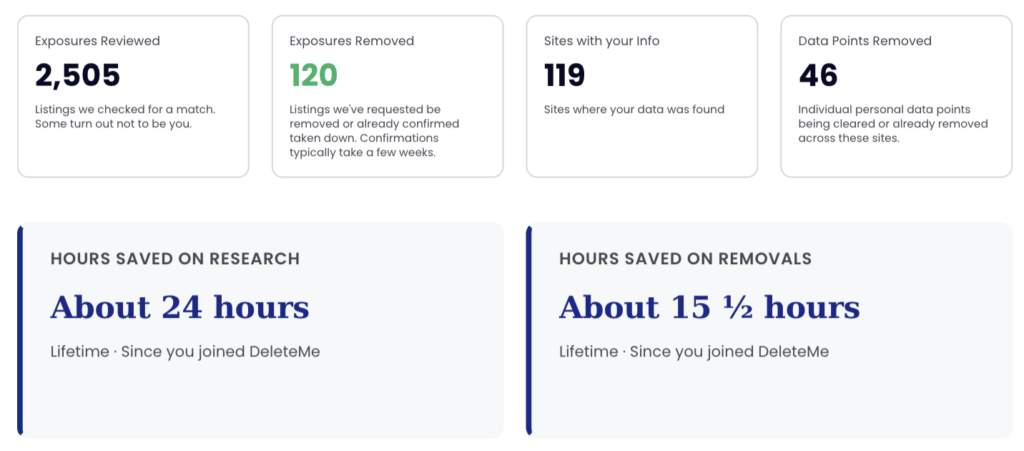
The other figures I found measure different things, so I would not line them up. One review says new users typically see an average of 57 site removals in the first round. DeleteMe’s pricing page says its plans remove an average of 15 public, Google-able listings within days. One counts sites and the other counts listings that show up in search. What I take from all of them is that the first report is a snapshot, and the value builds up through the repeat scans.
The ZDNET review scores DeleteMe 4.0 out of 5, and its reviewer recommends it as a fast way to clean up your data. DeleteMe’s own pricing page quotes an average rating of 4.7 out of 5 from over 400 reviews. I treat the second figure as marketing and the first as the more useful signal.
What it cannot do
Some data is out of reach. DeleteMe cannot delete court documents or government filings, because those records are legally required to stay public. It also cannot delete your social media profiles or posts, so those stay your job, although it can remove public records and social media details from broker sites and give guidance. I would expect the same limits from any service in this category.
Google is a related case. DeleteMe does not clear Google’s cache directly. It removes the listing at the source and relies on search results dropping out as they refresh. A built-in Search Yourself tool lets you check whether your details still show up, though it takes a few weeks before changes appear.
The terms of service are blunt about the rest. DeleteMe promises good-faith effort, cannot guarantee that a broker honors a request, and says it will not remove all of your information from the internet. Eligibility is narrow too, and one review lists US residents only as a drawback.
If you only need a handful of sites handled, doing it yourself is realistic. Many brokers publish opt-out forms and Google has a Results About You tool, as one reviewer notes, but the work repeats after every new leak. For the manual route, see my guide to getting your details off the web. A VPN, like the one in my Proton VPN review, protects your connection but does nothing about broker listings, so the two do different jobs.
Privacy and what you hand over
The setup asks for a lot: names and aliases, email addresses, phone numbers and past addresses, plus the optional ID photo. Under the terms of service you also give Abine a limited power of attorney, which lets it submit opt-outs, sign opt-out documents, communicate with brokers and create accounts on your behalf. It lasts until you cancel.
The terms say you keep ownership of what you submit and that Abine will never sell it. They also say your details have to be passed to brokers so that they can opt you out, and that DeleteMe cannot control what a broker does with them afterward. A review adds that the details entered during setup are used only for removals and deleted once those removals are confirmed complete, and that the work is done by US-based specialists.
That is a reasonable policy on paper. Neither review mentions an independent audit of how DeleteMe handles this data, which is the kind of outside check I would like to see from a company that holds a file on you. It is the main reason my privacy score stops short of the top.
Support
Support runs by email, live chat and phone, and each plan includes a dedicated privacy advisor who reviews your reports and guides custom cases. The help center has articles on two-factor authentication, security practice and subscription management, plus DIY guides for more than 100 brokers.
The same review says customers praise responsiveness in the first few months, when reports are busiest, and that advisors look at your data profile before replying. A phone line on every plan is a point in its favor, and it is why support scores in line with the other services on this site.
Pricing
| Plan | What you pay | Monthly equivalent |
|---|---|---|
| One person, one year | $129 a year | about $10.75/mo |
| One person, two years | $209 for two years | about $8.71/mo |
| Two people, one year | $229 a year | n/a |
| Two people, two years | $349 for two years | $14.54/mo |
| Family of four | $329 a year | n/a |
Prices from DeleteMe’s pricing page and two published reviews, checked June 2026.
The table mixes sources, because the pricing page I saved showed only the two-person, two-year card. The one-person prices and the one-year couple price come from two reviews that agree with each other, so confirm them at checkout. Each longer term lowers the monthly cost. For one person, the two-year plan is roughly $8.71 per month and the one-year plan roughly $10.75.
Billing is the part to read carefully. One review lists annual prepayment as a drawback, and there is no monthly option. The terms describe a recurring subscription that bills automatically at the end of each cycle. They give a full refund if you cancel before your first privacy report and a prorated refund after it, and the pricing page adds a 100% satisfaction guarantee. The pricing page does not state a renewal price, so I would note the renewal date and check the price before it comes round.
One more mismatch: the summary box in one review says some features sit behind higher tiers, yet its buying advice says every plan gives the same services, and the other review agrees. The pricing page also links to a premium plan whose contents I could not read in the saved text, so look at what it adds before you choose.
How it scored
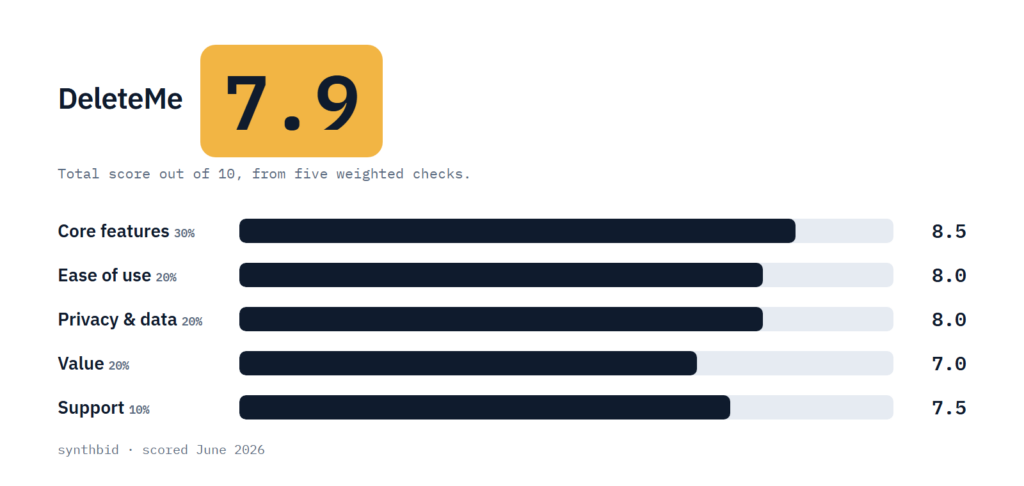
Core features, 8.5. A hybrid of automation and people, a list of more than 750 brokers, up to 40 custom requests and reports with screenshots make this a deep service. I took points off because it cannot touch public records or social posts, it is limited to US residents, and first results vary from one reviewer to the next.
Ease of use, 8.0. Setup is a data sheet and a welcome email, the first report arrives within about a week, and the dashboard is described as clear. The optional ID upload, the opt-out emails you may have to confirm and the slow quarterly rhythm keep it from a higher score.
Privacy and data, 8.0. The terms say Abine will never sell your data, setup details are deleted once removals are confirmed, and the work is done by US-based staff. I took points off for the amount of personal data involved, the limited power of attorney, and the lack of any independent audit in the published reviews.
Value, 7.0. The service costs more than basic automated options and has no monthly plan. What you get for the money is real, with people checking the work and custom requests included, but the entry price is high for one person.
Support, 7.5. Email, chat and phone on every plan, plus a named advisor, is a solid set. It stays at 7.5 because support carries the smallest weight and nothing in the sources sets it apart from the rest of the category.
The weights come from the How I test method, and DeleteMe totals 7.9.
Alternatives worth a look
Incogni
Consider it if you want a fully automated service. One review says budget-conscious and international users might prefer it for its simplicity.
Privacy Bee
Consider it if you value versatility in a privacy tool. The same review says privacy enthusiasts lean toward its wider ecosystem.
Do it yourself
Consider it if you have time and only a few sites to clear. My guide walks through the opt-outs step by step.
FAQ
Is DeleteMe actually worth it?
It is worth it if you are in the United States, would rather pay than spend evenings on opt-out forms, and are happy to commit for a year. I would skip it if you want a one-off cleanup, month-to-month billing or the lowest price, because reviewers call it pricier than basic automated services. The reports and the human check are what you pay for.
Does DeleteMe have a free trial?
The pricing page lists no free plan or trial. The site does offer a free scan, and the pricing page lists a 100% satisfaction guarantee. The terms give a full refund if you cancel before the first privacy report and a prorated refund after it.
Does DeleteMe work outside the United States?
One review lists US residents only as a drawback, and the pricing page I saved is set to the US. If you live elsewhere, check eligibility before you pay.
Can DeleteMe remove my information from Google?
Not directly. It removes the listing at the broker that publishes it, and search results drop that listing as they refresh. Its Search Yourself tool lets you check whether your details still appear.